Removing Barriers, Not Character: Accessible Home Remodeling Near Bridgewater
We love Bridgewater for its history. We love the classic Capes, the sturdy Colonials, and the charming Victorians that line our streets. But let’s be honest: homes built in 1920 (or even 1990) were not built with accessibility in mind.
They were built with narrow doorways, steep front steps, and laundry rooms buried in the basement.
If you or a family member is navigating life with mobility challenges—whether it’s a temporary injury, a long-term disability, or just the natural changes that come with age—you know exactly what I’m talking about. Your home should be your sanctuary, but sometimes it feels like an obstacle course.
At Conway Home Remodeling, we believe you shouldn’t have to fight your house to live in it. As a specialist in accessible home remodeling near Bridgewater, we transform older, difficult layouts into spaces of freedom and independence.
Forget What You Think “Accessible” Looks Like
When I mention accessible remodeling, most people immediately picture sterile hospital ramps and industrial grab bars. Let’s throw that image out.
True accessibility (often called “Universal Design”) is about invisible functionality. It’s about creating a home that works seamlessly for everyone—from a toddler learning to walk to a grandparent using a walker.
Here is how we are changing homes across Plymouth County:
1. The Zero-Entry Entrance
The biggest barrier is often just getting through the front door. Instead of bolting a clunky metal ramp over your front stairs (which screams “accessibility retrofit”), we look for smarter solutions. Can we regrade the landscaping to create a gentle, paved path that leads to a side entry? Can we build a beautiful farmer’s porch with an integrated ramp that looks like part of the original architecture? The Goal: A smooth entry that welcomes wheelchairs, strollers, and tired feet equally.
2. Bathrooms Without Barriers
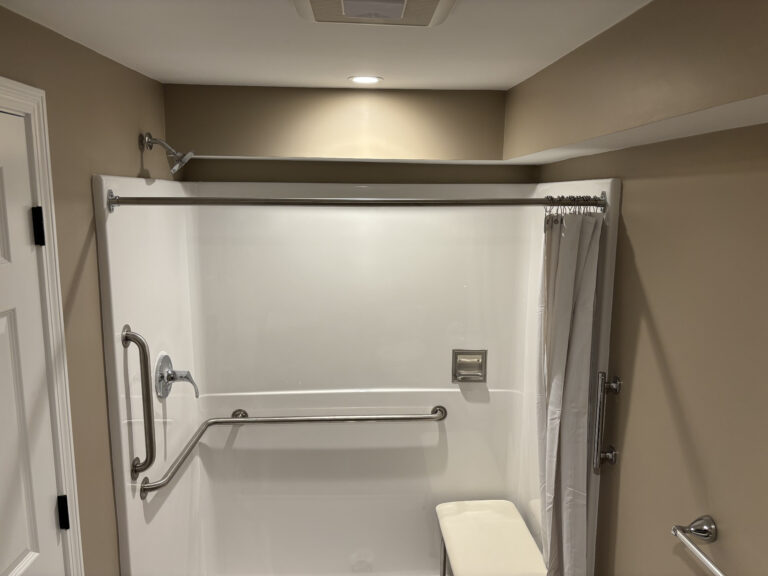
The days of stepping over a high tub wall are over. We specialize in curbless, roll-in showers.
-
How it works: We slope the floor gently toward a linear drain, removing the “curb” entirely.
-
The Benefit: A wheelchair can roll right in, or you can walk in without tripping.
-
The Look: With floor-to-ceiling tile and frameless glass, it looks like a high-end luxury spa, not a medical facility. We also install reinforced backing in the walls now, so sleek, designer grab bars can be added securely whenever they are needed.
3. Opening the Flow
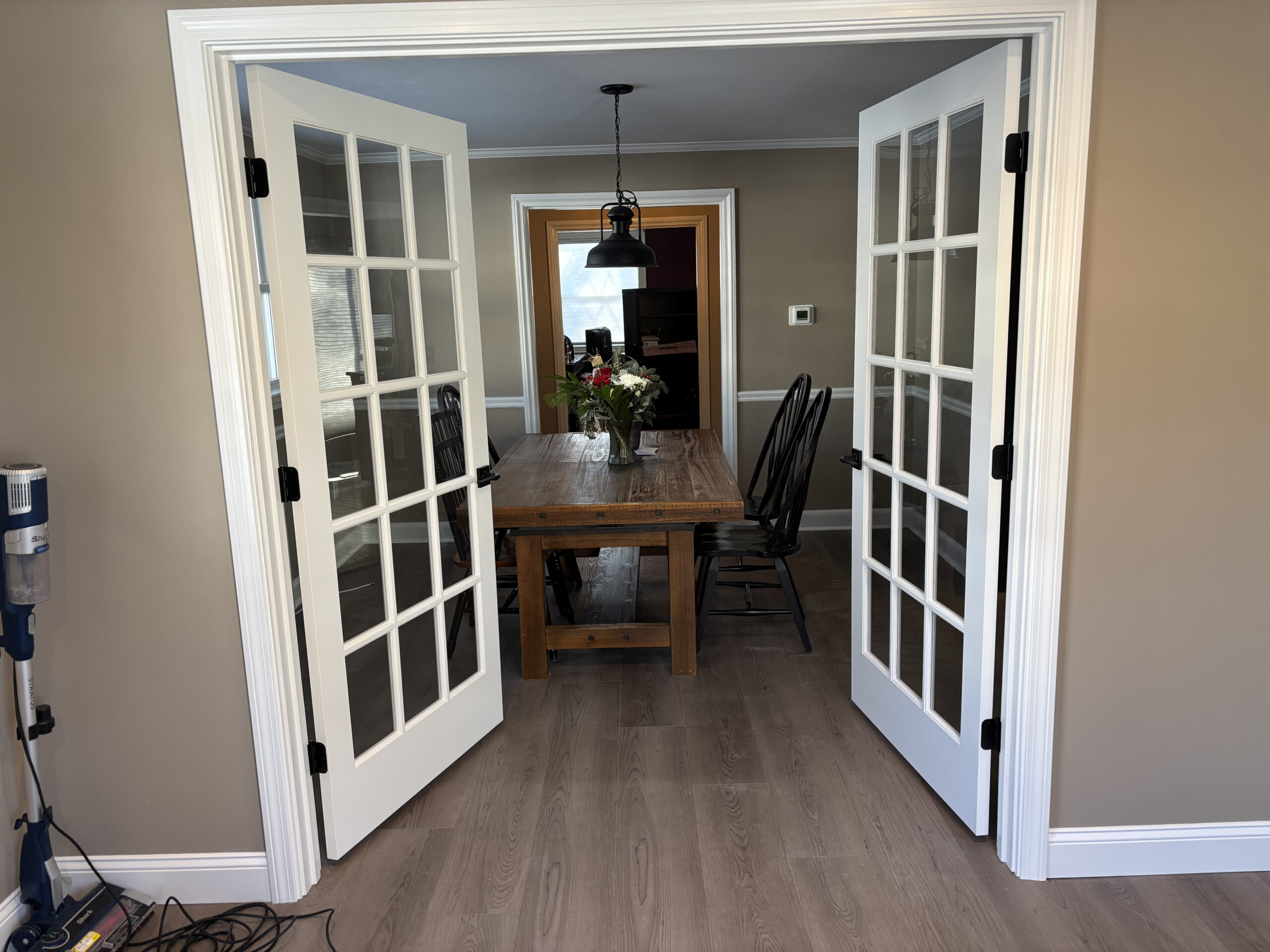
Standard interior doors in Bridgewater homes are often 28 or 30 inches wide. A standard wheelchair needs 32 inches minimum; 36 inches is ideal. We widen those doorways. While we’re at it, we look at “pinch points”—tight hallways or sharp corners that make maneuvering difficult. Sometimes, removing a non-load-bearing wall doesn’t just open up the sightlines; it gives you the turning radius you actually need to move freely.
4. Kitchens Within Reach
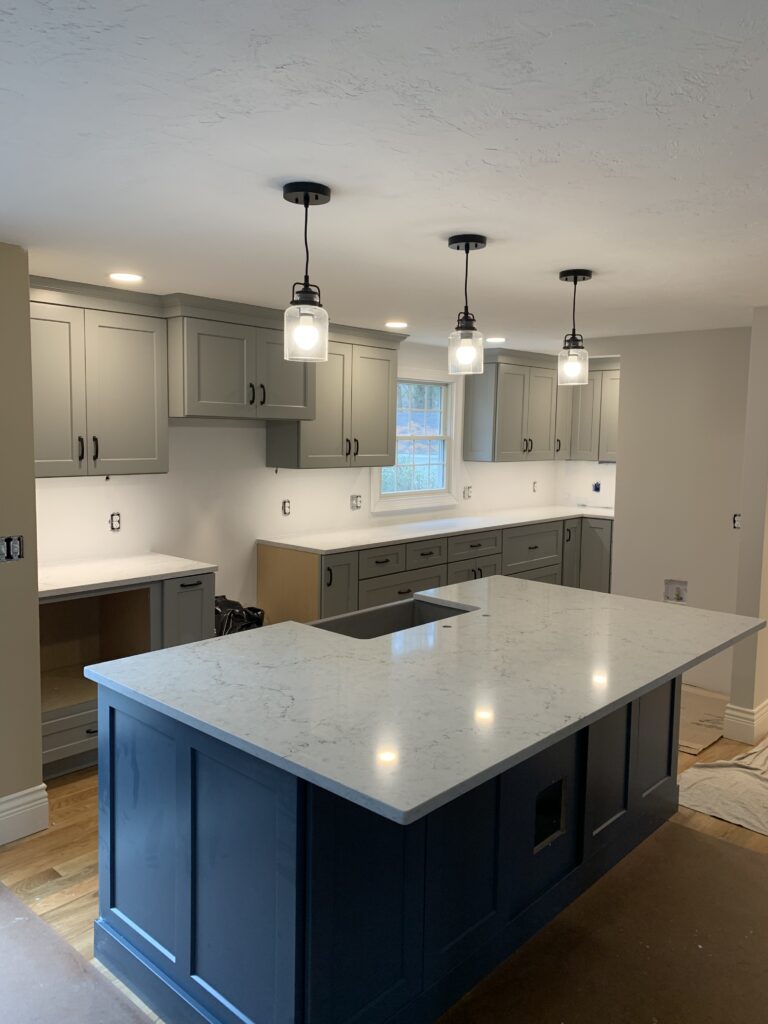
A kitchen isn’t functional if you can’t reach the sink or the stove. We redesign kitchens with:
-
Varied Counter Heights: Sections of countertop lowered to 30-34 inches for seated prep work.
-
Roll-Under Sinks: Cabinetry that opens up to allow a wheelchair to slide underneath.
-
Smart Storage: Pull-down shelving in upper cabinets so you don’t have to stand on a chair to get the good plates.
Why “Near Bridgewater” Matters
You might wonder why it matters that we are local. Accessible remodeling in New England requires specific knowledge. We aren’t just installing a kit; we are dealing with 100-year-old foundations, quirky framing, and local building codes.
We know that a “simple” door widening in a historic Bridgewater home might reveal knob-and-tube wiring or structural posts that need to be addressed. Because we are local, we know how to handle these surprises efficiently without derailing your timeline or budget.
The Conway Approach: Empathy First
We know that calling a contractor for accessibility modifications can feel emotional. Maybe you’re bringing a parent home from rehab, or maybe you’re realizing your own mobility is changing. We get it. We approach every project with:
-
Respect: This is your home, not a job site.
-
Listening: We don’t assume we know what you need. We watch how you move through your space and listen to your specific frustrations.
-
Honesty: If a certain modification won’t work with your home’s structure, we’ll tell you upfront and propose a viable alternative.
Let’s Make Your Home Work for You
You don’t have to move to find a home that fits your needs. You just need the right partner to unlock the potential in the home you already have.
If you are looking for accessible home remodeling near Bridgewater, let’s talk. We can walk through your home together, identify the barriers, and design a plan that brings back your independence.
Ready to reclaim your space? Call Conway Home Remodeling today or fill out our contact form to schedule your consultation.