Deck & Outdoor Living Remodeling for Coastal Massachusetts Homes: Built for Ocean Views and New England Weather
Living along the Massachusetts coast—from the rocky shorelines of Cohasset and Scituate to the sandy beaches of Marshfield, Duxbury, and Plymouth—offers unmatched ocean views and crisp Atlantic breezes. However, that same coastal environment presents some of the toughest building conditions in New England.
Salt air, driving rain, freezing winter storms, and humid summer sun can disintegrate standard pressure-treated lumber in just a few short years. Furthermore, building near coastal banks, tidal marshes, or ocean dunes requires navigating strict municipal environmental regulations.
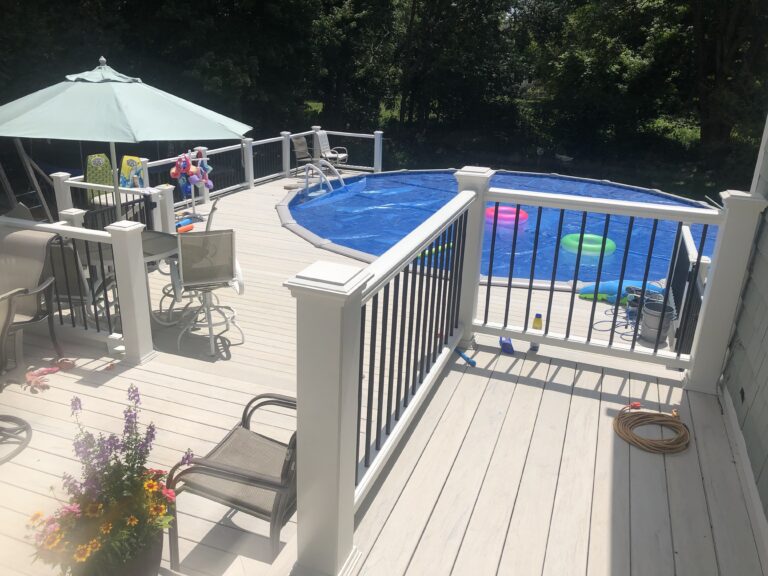
At Conway Home Remodeling, we specialize in building high-end deck and outdoor living spaces that seamlessly blend indoor and outdoor entertaining while standing up to coastal Massachusetts weather for decades.
Key Takeaways:
- Materials Matter in Salt Air: Cellular PVC decking (such as AZEK) and high-density tropical hardwoods (like Ipe) outperform traditional wood, resisting rot, salt damage, and intense moisture absorption.
- Marine-Grade Structural Hardware: Building within coastal wind zones requires 316 stainless steel fasteners, structural hurricane ties, and helical pile foundations engineered for high-wind loads under Massachusetts State Building Code (780 CMR).
- Conservation Commission Approvals: Any deck or patio project within the 100-foot buffer zone of a wetland or coastal bank falls under the Massachusetts Wetlands Protection Act, requiring local permitting before construction begins.
The Coastal New England Challenge: Weather, Salt, and Wind
Building an outdoor living space on the South Shore is fundamentally different from building inland. Coastal properties face three distinct environmental stresses:
- Salt Spray & High Humidity: Salt acts as a natural magnet for moisture. Traditional wood decks absorb saltwater, causing rapid rot, board warping, and rusting of standard zinc or galvanized joist hangers.
- Extreme Wind Loads: Under the Massachusetts State Building Code (780 CMR), coastal towns in Plymouth and Norfolk counties are designated high-wind zones, requiring structures to withstand wind gusts ranging from 120 mph to over 140 mph during severe Nor’easters.
- Freeze-Thaw Expansion: Winter temperatures repeatedly freeze trapped board moisture before thawing in spring sun, cracking lower-grade deck materials and pulling nails free from underlying joists.
Choosing the Right Coastal Decking Materials
When evaluating decking for a coastal home, low maintenance and moisture immunity are top priorities. Here is how the most popular options compare:
1. Cellular PVC Decking (Top Recommendation for Coastal Homes)
- Performance: Unlike composite decking—which contains wood fibers that can absorb water over time—cellular PVC (such as TimberTech AZEK) contains zero wood products.
- Why it Works: It is 100% moisture-proof, will not rot, resists surface mold in damp ocean fog, and stays significantly cooler underfoot than dark composite materials.
2. Capped Composite Decking
- Performance: Features a durable polymer shell encasing a recycled wood and plastic core.
- Why it Works: Ideal for semi-coastal properties set back from direct ocean spray. Capped composites offer rich wood-grain aesthetics with minimal seasonal maintenance beyond soap-and-water washdowns.
3. Tropical Hardwoods (Ipe & Cumaru)
- Performance: Dense natural hardwoods with Janka hardness ratings nearly eight times higher than cedar or pine.
- Why it Works: Dense interlocking grain structures prevent salt water penetration and rot naturally without chemical treatments. Hardwoods will age to a weathered silver-gray patina unless oiled annually.
Non-Negotiable Framing Hardware: 316 Stainless Steel
Regardless of which surface board you choose, the underlying framing is what keeps your deck standing during a winter gale. Standard galvanized hardware corrodes quickly in salt air. We exclusively utilize 316 marine-grade stainless steel screws, ledger bolts, and hidden fasteners to prevent structural decay.
Navigating Local Conservation Commissions
If your property is adjacent to ocean beach, salt marsh, or a coastal bank, your deck remodel falls under the Massachusetts Wetlands Protection Act (M.G.L. Ch. 131 § 40).
- The 100-Foot Buffer Zone: Any work proposed within 100 feet of a wetland resource area requires approval from your town’s Conservation Commission (e.g., Scituate, Marshfield, or Duxbury Conservation Boards).
- Permitting Paths: For simple deck replacements on existing footprints, we file a Request for Determination of Applicability (RDA). For expansion or heavy groundwork, a formal Notice of Intent (NOI) is required.
- Helical Pile Foundations: To protect sensitive coastal soils and root systems, we frequently install steel helical screw piles instead of digging traditional concrete footings. Helical piles screw deep into sandy soil with minimal ground disturbance, providing exceptional uplift resistance against coastal winds.
Designing for True Indoor-Outdoor Flow
A modern outdoor living space should feel like a natural extension of your home’s interior floor plan. Popular design additions for South Shore coastal properties include:
- Multi-Slide Glass Doors: Replacing small sliding doors with wide-span folding or multi-slide glass panels opens kitchen and living areas directly onto the deck.
- Flush Level Thresholds: Designing the deck surface flush with your interior flooring creates a continuous, step-free transition.
- Covered Pergolas & Wind Break Screen Walls: Installing glass railing panels or timber pergolas preserves panoramic water views while sheltering your dining area from stiff ocean breezes.
- Integrated Outdoor Kitchens & Fire Features: Built-in marine-grade stainless steel grills and linear gas fire pits extend your outdoor entertaining season well into chilly New England autumn evenings.
Build an Outdoor Space Built to Last
Your deck should be a place to relax and take in the coast, not a endless list of weekend painting and repair projects. By pairing resilient materials with marine-grade structural engineering, Conway Home Remodeling constructs coastal outdoor living spaces built for a lifetime of enjoyment.
Ready to upgrade your coastal deck or outdoor living space? Contact Conway Home Remodeling today to schedule your design consultation and site assessment.